Friday, April 1, 2016


I based my sculpture off the Xenomorph from the Alien movies, although was unable to achieve the level of detail I desired, I am pleased with the result. 


Monday, March 14, 2016

Dan's thing


http://thumbs.dreamstime.com/z/human-anatomy-muscles-skull-clipping-path-538631.jpg

Dylan and Shaun's Twin Sculpture Faces

My apologies on this taking so long to get up.  I was certain I had done this a few days ago but given I cannot find the image on the blog I'm re-uploading here.


Saturday, March 12, 2016

Plaster sclupture

I have been passionate about exploring the world and wilderness specifically. A giraffe is my favourite animal and I have been collection sculptures and photographs of giraffe for many years and wanted to add a plaster sculpture to the collection. I was inspired by the drawing attached and decided later to add my own twist of gestural lines and abstraction since I really challenged myself. I paint to paint this artwork to complete the piece and store it in my room.

Thursday, March 10, 2016

For my sculpture, I was inspired by the interesting shapes and movement within this piece. It was definitely a challenge to get the curves as well as carve deep into the plaster to create a 3-dimension feeling.

Monday, March 7, 2016

Plaster Sculpture Inspiration

I was personally inspired by the painting entitled Sunrise by the Ocean created by Vladimir Kush.  This surrealist painting features a sea scape with the sun setting directly between two shells of a cracked egg.  The painting's air of whimsy creates a sense of humour within, yet still speaks to the many meanings of which an egg can symbolize.  As odd as it sounds, an egg can be quite elegant due to its simple curvilinear shape.  This is why I felt as though an egg shape would be suited for sculpture as it is both simple and yet beautiful.  However in order to push the concept even further, I want to have the egg be cracked and have the yolk represented as a sphere between the two halves.

Tuesday, March 1, 2016

Higgin's Reading and Mashup

https://www.youtube.com/watch?v=hSgexhVPEsw

Mashup- Linlin


I choose this image to represent the reading.
This is one of an image of a "Trick Art", and most of trick art complete when there's people to engage to the art. I think Trick Art itself is just an object but engagement of people makes it an intermedia arts.

Thursday, February 25, 2016

audiovisual mashup

https://youtu.be/SSCARFtnZzM

i'm really hoping this doesn't get taken down

Mashup - Samantha and Emily


Chandelier Solitude by Denise Apostolatos


Jonathan Salvagna Soundscape


Dan's response to Higgins

For me, this article was a paradigm shifter.  It made a lot of sense to me in the first paragraph when this point was brought up: that people are looking to get back to the basics because of the over saturated media of our modern day.  It truly does make sense in that regard because anyone can gonon the internet and view famous works of art from anywhere in the world. Part of what makes "happenings" and other intermediate works of art so special is the immediacy and intimacy of those pieces.  I also began to ponder the point about drugs and how they will only enhance the experience of the artworks, as opposed to inspiring new methods. Personally, I agree. Inspiration comes from within and from a revelation, not psychedelics.


The image I chose is not so much a picture of something, but it represents the event. When I first went to nuit Blanche it was my first true experience go avant garde art and intermediate. At the time, I did not understand or comprehend why artists would even make any of the weirder things I saw. This article brought me back to that event and evoked a feeling of closure. Those pieces of art which confused me were much simpler than I was trying to make them.  I will definitely be keeping an open and clearer mind in the future when dealing with this newer wave of art.

Higgins - Marc Lew

Reading through the Higgins reading it really felt like a sort of manifesto. Some of his wording in his statements felt very... grandiose and cult-like? The first paragraph has got to be one of the most hippy things I've read and I honestly felt insecurity in it. By the second line he's talking about how art is attacked and then immediately goes on to attack the 'authorities.' And I'm not sure I get his point, to be perfectly honest.

"Does it not stand to reason, therefore, that having discovered the intermedia (which was, perhaps, only possible through approaching them by formal, even abstract means), the central problem is now not only the new formal one of learning to use them, but the new and more social one of what to use them for?"

I have no idea what this means. I guess he's trying to figure out where Intermedia lies and how we should be approaching it. Earlier in the reading, he refers to Intermedial approach as the "dialectic between media." Basically, how intermedia is the formal approach to combining different forms of media and creating something wholly unique.


This image, I feel, is a good representation of Intermedia. It combines 2D artwork with 3D - prop work with paint.

Higgins and Smith Readings

In the Higgins reading I felt like I was reading some weird propaganda to use inter-media to say things in a form of art rather then speaking up. That is okay I suppose since it gives things meaning but I don't think it should be used for an inter-medial uprising it's just another means to get your point out there. In the Smith reading was interesting it suggested that inter-media is a blend of multiple medias. It is an act of performing he says, which is a good point because humans are constantly acting but inter -media can be a blend of many things.
 For this article I choose a picture of pizza because it is a wonderful example of inter-media. It takes many things that exist already like mushrooms, tomatoes, and pretty much anything edible and combines them in such a scientific way that makes them pizza. But pizza is not used to send a message pizza is there for people to smile and accompanies a celebration of some sort. All you need is a oven and someone who knows how to craft such a delicacy. The most innocent form of inter-media it won't offend anyone because there is so much variety  of toppings that no one will ever feel left out. It re-purposes natures gifts with the help of human talent to make this fantastic art.

Mashup and Reading Response - Tyler Dyet


Audio Video Mashup - Fearful


 Higgins and Smith reading

         While looking through the two readings for this week I found myself pondering how artists create their work. Higgins speaks of artists having to transform or alter their work to fit a broader medium. Musicians are poets and painters are sculptors, this is the idea of art having broader meaning. Regardless of where their art may have begun, artists can involve other art forms within their art. Higgins discuss intermedia as the blending or art, whereas a painting can speak to poetry even though there is nothing to read. Thus creating new hybrid forms of art, much like concrete poetry or happenings. Smith speaks to this idea when he states "Intermedia should also be seen as part of a process of creative innovation and question forming". He touches upon the same idea as Higgins but through a more analytical format, stating more facts than feelings. Smith also looks at an idea purposed by Higgins, where "intermedial works were an expression of an attitude, or worldview. Objects, books or experiences might be generated in the creative process, but fundamentally they were acts, not things." This idea forms why we create art, to further our own thoughts or ideals. Artists purpose a viewpoint on a subject, rather than simply creating an object. 

        An image that correlates to these readings and ideas is one created by Banksy. His work is formed around the idea of "intermedial works are expressions of an attitude, or worldview". Giving a fresh perspective through the mediums of art, purposes ideals and thoughts, rather than art as an object. This image consists of a protester about the throw flowers, instead of a more violent object. Banksy is giving us a fresh perspective on the ways we fight for things or allow ourselves to become violent. This image has meaning and purpose, Banksy is giving us his take on an issue.

Mashup and Reading Response - Shaun Housden

Audio Video Mashup - Explosive Disappointed


Smith And Higgins Reading Reaction


Its funny after reading this weeks readings on intermedia and its embrace as a new form of art, it made me think of all the times that intermedia has been in my career as an artist. Thinking about it, I really couldn't think of an example of anything I had done outside of this class that may be considered intermedia. Than I thought back to the articles and how the discussion of Intermedia was phrased. Primarily about how its a coming together of mediums/skills and how its an evolution of what their was before.

That made me think of all the projects that I have done in the past be them film or video games and how those are truly an example of my Intermedia experience. And how all these projects are a coming together of so many disciplines and ability in order to make something new and unimaginable with just the abilities of one person or talent. So what I choose as an example of this weeks reading was a film that myself and some others made for 2P98 last year as our final project,Including our very own Dylan Pineo! (Come on Dylan give us a bow). I choose this because it involved so much different skills such as video recording,drawing,performance and whole lot of others.


Audio Video Mashup + Smith and Higgins Reading - Dylan Pineo

Audio Video Mashup - Thunderous

 This was a particularly...challenging project for myself.  School work and projects outside of school have been piling up on mass and so it was a real struggle to get my creative juices flowing to come up with an idea that met the criteria for this assignment.  Perhaps choosing the word thunderous had been one of the issues given that without some heavy editing most of our sound bank sounds didn't really evoke any booming responses.  Then it came to me.  Thunderous applause.  I could find some sort video that could be based around awards and with all the struggling I had been experiencing lately I wanted to also incorporate that in my work.  And that led me to the man who struggles most at one of the prestigious award shows.  Mr. Leonardo Dicaprio.  So without ado I present what happens when you combine an elevator, wookies, a crazy laugh, and an inspirational Zsolt with Leo last year at the Oscars.


Smith And Higgins Reading Reaction
By Dylan Pineo
This weeks reading was a rather interesting one. It was interesting to actually get a perspective on the state of art from the 1960s and from the man who coined the term intermedia in the first place. Mr. Dick Higgins certainty appeared to have his own way about thinking about to design, communicate, and view art. 

As Smith explores what Higgins means by “art as a form of communication”, it got me thinking. While what Higgins defined what intermedia was int he 1960s, intermedia actually seems rather engrained in culture and practice all across history. Intermedia is “...an expression of an attitude and worldview. Objects, books or experiences might be generated in the creative process, but fundamentally they were acts, not things. The works become instructions (sometime even literally) to do, make and think.” So this brought my history-geek mind to wonder about ancient drawings, cravings, and pottery that were found all across the ancient settlements of South America, Africa, and the Middle East. Almost all of these works that have been preserved are either a reflection of events that effected the culture or are often religious attitudes of the people. So when some lucky potter had been deemed the task to craft an urn and paint on it the results of an incursion by another group of people we are can interpret that information from it. Perhaps I am taking this all a bit too literally in regards to the process of; event happens, event is recorded, art is created of the event, and then we are able to receive communication from the work. Yet these works are able to convey so much of the people to us. Depending on their work we have a chance to view their attitude towards other people, their own inner factions of society and so on and so forth. Now this tradition has continued greatly into the modern era. In fact I can guarantee most of us actually use these type of intermedia communication everyday. Emojis are no different than 3000 year old pots when we are talking about the expression of ourselves and our attitudes regarding certain subject matter hence my image below.

Tuesday, February 23, 2016

The Reading Assignment


After reading the two articles this week I find myself imagining new ways of communication, in relation to my understanding of the text now. An important quote from the Dick Higgins reading is, "We must find the ways to say what has to be said in the light of our new means of communicating". Higgins describes how art is evolving in the traditions of how we make art today in comparison to the past, with our new skills and knowledge of practices to create original works that serve to portray a conceptual message. From Smith's reading I found it significant when he states: "[intermedial or exemplativist works] cannot be ends in themselves. Instead they always participate in the ongoing process of sharing an experience." This quote explains the significance of intermedia art as a continuous experience that artists participate in over time and also a way to communicate a experience of their within their art. The image I embedded below to represent the information for this week was the internet. The internet is one major source that allows intermedia to be created and combined in our digital world. The options to manipulate and overlap mediums on display that is widely accessible to all. The internet also does not come in one form. For example Firefox, Safari, Internet Explorer are three well known browsers that allow people to access the database of an internet. In our current era the forms of communication are rarely in person, rather we receive calls, text messages, emails, web links etc. The main topic that is being discussed in both readings is: what is intermedia. To the best of knowledge intermedia is an art form that combines pure styles and mediums of art together to create new ways of viewing art in appropriated form. 

Monday, February 22, 2016

Smith and Higgins Reading

          I found the both of these readings to be quite interesting. I thought that both the Higgins and the Smith reading provoked an emotional and personal response rather than an informative response to the reading. Smith discusses the stability of intermedia and how our exploration of intermedia has resulted in new forms, genres or media which can be identified as performance art, installation sculpture and sound art. This makes me think about how everything starts from a base and can grow from there reaching to different interests, forms and people. Similarly, Higgins considers aspects within art that focus on what we care about, what we love and even things that we hate. The strands of art that we enjoy or that speak to us as individuals should be what we continue to pursue as artists as this could be what creates new forms of art through our own personal exploration. Smith suggests that intermedia should also be seen as part of a process of creative innovation and question forming that spans the 20th century. I believe that with this, it allows individuals to be apart of the creative process, question boundaries of intermedia and take the time to effectively convey that through new forms of communication.


I chose this photo as it demonstrates the various ways that something can be stretched into different forms, create different outcomes and influence different experiences, but still reside as the same original “something.” Similar to intermedia, it can take on many different forms but at the end of the day, it’s still intermedia (or still a potato...) From here, we can implement our own personal exploration and individualize it to our likes and dislikes fuelling the creative process.


Tuesday, February 16, 2016

Higgins and Smith Readings Response

Within Higgins' Statement on Intermedia and Smith's Without Borders VII , there is mention of artists changing their media to suit the change in communication to being primarily through television and radio.  Artists create works that criticize or point reference to how society is now communicating as of the 1950s.  An example of this would be Andy Warhol.  Warhol used imagery classified as low culture from everyday life, such as the Campbell's soup can and celebrities, and created iconic screenprints (classified as fine art) which in turn elevated these mundane images to being of a 'higher culture'.  He also created video works such as his Screen Tests and installations such as his supermarket containing Brillo Boxes, showing the new meshing of art and advertising.  Much like Duchamp, Warhol's work challenged the notions fine art.  He comments on how mass production is the root to iconicity and how viewers consume his work no differently than they would consumer goods.  The reading states "a composer is a dead man unless he composes for all the media and for his world." Despite that Warhol did not necessarily create Marilyn Monroe, Campbell's soup cans, Coke bottles or Brillo Boxes, he most definitely popularized them and in turn created the iconic imagery of the 50s and 60s in America.  Warhol's work exemplifies intermedia exactly when Smith's article states "works cease to be located in terms of media or materiality - and instead takes a position somewhere between - between thought and deed, between process and product, and between subject and object.


Thursday, February 11, 2016

Reading response to Ros Bandt

Ros Bandt’s writing on sound installations provides valuable insight to the world of sound as an art.  Particularly, the strongest arguments were centered on the temporal and technological aspects of sound.  Firstly, sound is finite.  Unlike a painting which hangs in a museum or a video that might be uploaded to youtube, a sound can only exist in a brief moment of space and time.  Recording that sound changes it and so does playing it back.  Therefore, sound installations are experienced in the moment that they live.  Bandt makes an excellent point by saying that these sound installations invite multiple visits because they do indeed change over time.  Have you ever been to a banquet hall on the night of a wedding and then again on the next day when it is completely cleaned out and empty?  Or at a park when a concert is going on and again a week later when it seems like nature is the dominant force?  These experiences of soundscapes relate directly to the way that sound installations change over time.  The writer also acknowledges the profound impact that technology has had on sound as an art.  Indeed, many contemporary sound installations would not be possible 50 years ago.  I am excited to see how the exponential growth of technology affects the use of sound as a creative outlet. 


The image here is a picture of an anechoic chamber.  These rooms are famous for being the quietest places on earth.  These rooms are so quiet that the only sounds heard are those created by the person in the room.  From the noise of breathing to the blood rushing in your ears to the faint hum of electric currents running throughout your brain, it is no wonder that some people hallucinate when enclosed in an anechoic chamber.   The reason I chose this image is clear to those who understand why this relates to a sound installation.  While an artist might try to get their audience to experience sound in a new way, the anechoic chamber succeeds in forcing those who enter into a world distinctly devoid of sound. 


The piece of music I chose is called Ratman the Weight Watcher.  Since my piece had lyrics, I felt it was important to include them in the notation. The instruments are represented with drawings to represent what kind of sound they should produce alongside various feelings implying the pitch and duration of each note. 

Graphic notation by Tyler Dyet


This sounds piece is a historical recording, performed by Orchestre Symphonique de Paris conducted by Julius Ehrlich, from the State Opera in Leningrad. It begins on a more calm side and then rises to an loud ominous tone. Using a majority of drums, piano, and chimes to achieve the sounds. This song places a heavy weight on the listener, almost as if they were on the way to the gallows. 


http://www.ubu.com/sound/meytuss.html

Blurring the Boundaries reading by Tyler Dyet

The reading by Ros Bandt "Sound Installation: Blurring the Boundaries of the Eye, the Ear, Space and Time" revolved heavily around the relationship between what we see and hear. Wrapping how we perceive and feel sound installations, into one mess of emotions and ideas. Below is a picture of the northern lights, something that can be seen and understood. When we add sound to it, the meaning and feeling of this particular space in time changes. The lights flow with the sky, much like sound flows through an individual and together it could result in an amazing sound installation. 


Thursday, February 4, 2016

Graphic notation


Graphic Notation & Blurring The Boundaries

Lauren Mucciarone


Len Lye's Universe 
http://www.ubu.com/sound/lye.html

Duration: 8:01
Structure: There are dropping sounds, or bangs followed by their echo and a continuous wavy, theremin like sound. The small circles represent the drops/bangs, and they are surrounded by an aura that is meant to depict the echoing sound. The overall drawing is surrounded by a few wavy circles, which are meant to embody the odd alien/theremin sounds.
Emotive Content: The drawing is meant to encompass each separate sound as well as the feelings felt while listening to recording. Each little circle is an individual being that creates the entirety of the form; reflecting how each little bang is an individual sound, yet it creates an odd echo and becomes something much bigger. The drawing is meant to be strange, alien-like and alive, just as the sounds feel.


Reading:

This photograph, by photographer Zhang Xiao, represents Blurring the Boundaries of the Eye, the Ear, Space and Time by Ros Bandt because it fully encompasses the spatial, temporal and haptic elements in sound art. This image shows people in very close proximity, a place that only temporarily inhabits the vistitors and a place almost everyone can relate to and remember. A beach contributes so much to all of our senses. In this photo I can imagine the laughter, the sounds of splashing, and the wind. "It unites time with architectural space, the eye with the ear, the past with present, the body and mind.." (Bandt). As sound connects to other senses, and to the past..etc, the beach is a timeless place, a place generations have celebrated and will continue to. It connects strongly to our body, the feeling of sand, water, and the sun, and it connects deeply to our mind.


Graphical Notation and Reading

For my graphical notation I chose a Piece named "Flea God" by Fat Worm of Error. http://www.ubu.com/sound/fatworm.html

If I were describe this piece with as little words as possible it would be electrical chaotic chanting. I only notated about 30 seconds of the 5 minute piece The messy notation reflects how messy and chaotic the actual piece is. It begins with rhythmic static, which then leads to a horn melody which is present throughout the rest of the piece to give the piece some structure. They then start adding things in. Like accordions, more horns, a drum but only briefly. Though I never mentioned the second constant through this piece. The chanting. It sounds like 3, maybe 4 guys chanting something, its hard to tell what they're saying but its the other constant throughout the piece. Overall I thought this piece sounded like a drugged out fever dream where everyone is larger than you and you're stuck to listen or else you will be crushed. A group of men might also worship you looking down at you chanting to you? I might be taking the title too literally.

Blurring the Boundaries

To represent the reading I chose a toaster with bread popping out of it. To me this is because the act of using a toaster utilizes all your senses in a specific amount of time. First, you touch the soft fluffy bread, you set the time in which to wait for the transformation, then you push it down and wait. There might be a ticking sound of the timer, and then you will start to literally smell the transformation take place, until finally, it is finished and it pops up, sometimes with a bell. Depending on what type of person or what state of mind you are, it could surprise you, it could delight you, and as you see the final version of what was at first fluffy and soft, is now hard, and crunchy and hot to the touch. You even get taste in there because you eat it.

GRAPHIC NOTATION and Blurring the Boundaries

"Schwitters Variations" (Variations on the theme of Kurt Schwitters's "Ursonate", 2001)

http://www.ubu.com/sound/tomomi.html

This audio piece consists of one person’s voice making rhythm with trilling and also sometime keep a long note

or repeat one rhythm constantly. There’s only one person’s voice but there’s so many different noise and mood.

He is not singing but making a lot of noises. 

Some phrase are very slow and calm, and the rest are very temperament.  

I choose this water dancing speaker to represent the reading.
This speaker links to any device has sound in it and play, while there’s music being played, the water inside of speaker moves
with motion of the music. Installing in a dark space would make the room a sculpture from reflection of the lights in speaker.
With this technology, both lights and water inside of the speaker would make illuminations comforting with the melody,tempo,volume from the music played. 


Graphic Notion + Blurring the Boundaries - Marc Lew

GRAPHIC NOTATION - http://www.ubu.com/sound/tellus_17.html
For my graphic notation, I wanted to choose a music piece. There were a lot of dialogue pieces but I managed to find a good music one by the name of Tellus #17: Video Arts Music. It's very weird. I wanted to do music for the graphic because music is such well organized, timed and structured thing that I thought would translate to paper really well. I only used the first 30 seconds, which introduces all of the pieces used. There are a few different drum beats used in a pattern, a background scratch, some odd vocals and a very weird instrument in the background that changes pitches frequently. I tried my best to match up the pitch of the instrument to my lines on the paper. In the end, I am not an artistic person so I decided to do something with a pattern to at least show off a well put together structure. Organization satisfies me. Here is the image.


BLURRING THE BOUNDARIES
Reading the... reading, I became quite interested in what a sound installation would be like. Normally, art installations are for the eyes only - but what Bandt describes in the reading sounds utterly fascinating. A piece that engages all the senses sounds less like viewing a piece of art and more like experiencing it. And even further, how they are described to be something that should be experienced over a duration - likely causing the piece as well as yourself to shift with time. Sound is likely the most transformative and malleable form of art among the senses. It is something that shifts constantly and changes with perspective every second. With visual, touch and scent adding context to the sound can offer it an entire new meaning. The biggest part of the reading that stood out to me is the temporal aspect of sound installations; how the sound you hear at one moment could be completely different than how it sounded at a previous moment, or perhaps you're the one who has changed. The image I have provided is that of an airport. Having had a 13 hour layover once, I experienced a lot of different sounds that changed throughout the day; whether it be the PA looking for passengers or announcing last calls, the sound of suitcases or the sound of running, the constant hum of hundreds of people talking at once. However, as the sun set and midnight grew closer all of these things changed. They became less, which resulted in more. When a hundred people talking turns into 10 people talking you start to hear words. After spending 13 hours there, the sound of suitcases becomes like birds chirping and the sound of the voice over the PA becomes more familiar than your mothers. 

Wednesday, February 3, 2016

Blurring the Boundaries and Graphic Notation


Blurring the Boundaries Response

I believe the reading is articulating how our interactions and understanding of sound is entirely dependant on momentary circumstances.  We experience a sound installation differently based on numerous factors such as location, environment, interactivity and others experiencing it as well.  We are unable to replicate the same experience twice as one cannot simply sit through a sound installation in its entirety.  Every time we leave and later revisit, the program would be different; and even if we were to return at the exact same moment in a pre-recorded program there would be other factors that would have changed.  As mentioned in the article, if a sound installation was in an outdoor setting there would be many uncontrollable factors such as birds chirping, airplanes flying overhead or people talking in the background.  Sound is ephemeral and can only really be experienced once.  In order to represent this visually, I chose an image of a bustling train station.  Having experienced locations like these many times, I have noticed that there are always the same repeating sounds.  Some of these being people talking, announcements of train arrivals, footsteps and the rolling of suitcases.  Despite that these sounds eventually all blend to form a soundscape that can be found at any busy train station, the individual parts as well as the order in which these sounds occur is completely organic.  No announcer’s voice will be the same, nor will any conversation you overhear in passing.     


Graphic Notation
The piece of which I chose was called Orient-Occident by Iannis Xenakis.  This industrial instrumental piece is 10 minutes and 58 seconds in length.  It features many grumbling and deep synthesized metallic sounds mixed with high pitch scratching, tapping and chimes.  I recognize sounds and tempos from Oriental percussion, however it is juxtaposed with very aggressive pounding and shearing sounds.  The piece has a very unsettling sound to it, almost acting as a score to a postmodern thriller.  As a response I chose to visually represent the intensity of some of the sounds and their frequency with colour using watercolour, India ink and charcoal.  The line work depicts how the individual sounds are layered over each other in continuance with some being more noticeable than others.  The piece does not flow in a sequential or predictable order as there are breaks of silence.  This is why I chose to let the ink and watercolour run in multiple directions showing how Orient-Occident is divided into segments and unpredictable.  http://ubu.com/sound/xenakis.html 


Blurring the Graphic Notation

A Graphic Notation
For my graphic notation I decided to select something a little outside of my normal recognition zone. Jean-Claude Gagnan`s ``Á Gaga Gougou`` is an experimental art piece that is performed with a loose spring and with what I assume is Jean-Claude speaking French gibberish (Thank you high school french). The piece evokes a sense of light playfulness and curiosity. The way the spring bounces along and the way the majority of Jean`s spoken word sounds like is using baby words evokes this particular set of emotions in myself. To me he acts like a little toddler who is exploring an environment for the first time and is using what words he knows to express his discoveries and new-found terrain and items. The notation itself is my written hand following along in the song from start to finish where softer sounds are often more curved and rhythm in kept pace through distance. Sharper lines are for when the piece became more harsh and sudden. The piece itself actually goes through quite the journey with pacing of several different ``sets` of softer slower moments to really quick, sudden, harsh moments.


Blurring the Boundaries Response

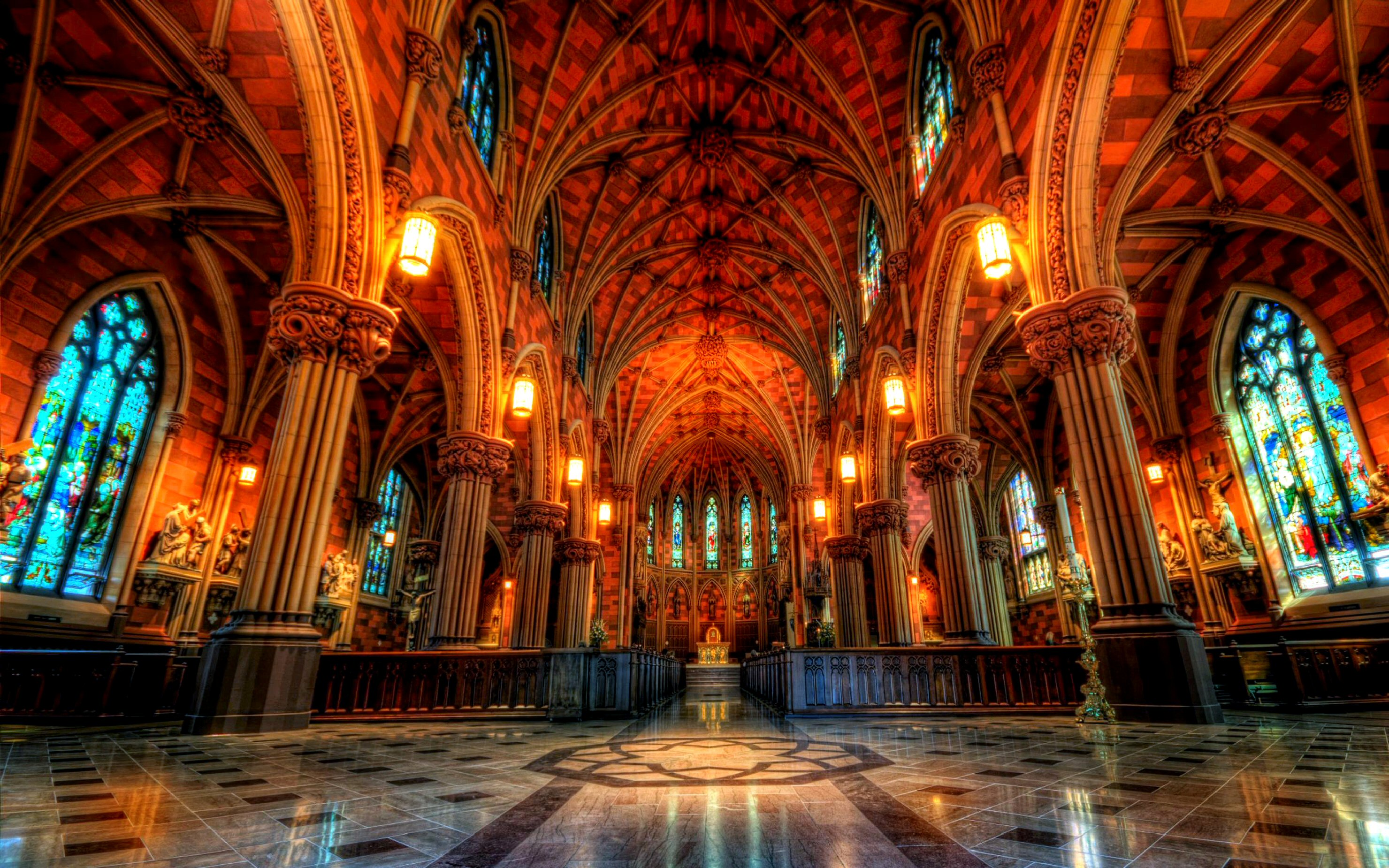
Well its been only a short time before I was actually introduced into the rather intriguing realm of soundscapes and sound installation art. Ros Brandt is able to go through a great amount of detail in regard to the art of well, creating a stunning sound art experience. Sound is unique in the art world due to its rather invasive nature. With visual art there is no force that forces you to look at it. With body performance there is nothing that forces you to partake or acknowledge the piece. However with sound it demands to be heard and begs for your attention. Without applying ear plugs one can not simply escape sound. Which is only a small part as to what makes this art form so interesting. Sound is invasive not just to our ears but to our emotions and to our very skin as Ros details. Just like when we smell a fresh baked pie or a rotten egg our body has a reaction and it demands that we execute it. When well designed sound art where the sounds use the space, the acoustics, and the audience themselves to make the piece what it is. Well not exactly what we are exploring with this reading I highly suggest to anyone who is interested in just how powerful sound is in defining a space I suggest you look up the work of Janet Cardiff. So why are earth did I choose a picture of this gorgeous cathedral? Should you ever have the pleasure to sit in a truly majestic cathedral of the Gothic or previous eras I suggest you take a seat for ten minutes, close your eyes and simply listen. These indomitable structures are perhaps the largest permanent sound installations the world is currently in possession of. The acoustics are so well designed that you can hear the shuffle of other visitors to the cathedral, the whispers of voices unseen, the echo of sounds unknown all throughout the massive halls. Whether by design or not these buildings came straight to my mind as soon as I started reading this article and just want to highly recommend the experience to anyone who wants to hear a living structure as odd as that sounds.


Graphic Notation and Blurring the Boundaries Reading

Graphic Notationhttp://www.ubu.com/sound/asshole.html


The piece that I chose was found in the “Just Another Asshole #5” selection (Can you imagine why I decided on this one?). It is called, Incantation by Wharton Tiers. I decided to portray my work in this way as it conveys the overall direction of the audio work and allows for the transitions between individual parts to be easily deciphered. The duration of the audio work is 0:48 and I have created my graphic notation according to the length of the piece as well as the duration of each individual part. I structured this piece as a reflection of the sounds I heard within it. More specifically, the shape of the work imitates the different levels of a whistle that is heard throughout the audio work. This whistle ascends and descends throughout acting as the core of this work. The individual sections from left to right indicate the rest of the sounds aligned with the highs and lows of the whistle. I found this audio work to provide the feeling of suspense. This was noted through the eeriness of the whistle rising to a climax and then falling and rising again. The drums would also seem to get louder and faster in some areas to emphasize that feeling. Overall, I enjoyed this piece because although it was able to perplex me and create an array of feelings, it also was very simplistic in its form.

Blurring the Boundaries
            I found this reading by Ros Bandt to be very interesting as I viewed it in a very spiritual way. Bandt defines sound installation as a place, which has been articulated spatially with sounding elements for the purpose of listening over a long time span. However, Bandt further describes what sound installation and sound art is through a broader, more open view. For instance, Bandt sees sound installation to be a complex and intricate art form in the way that it is created, installed and perceived. There are many questions that you must ask yourself when installing sound art. Such would include taking into consideration who your intended audience is, what space is appropriate for the work (public or private), if you want sound or silence etc. These questions overall allow for the audience to positively listen to the artwork in a creative, engaging and meaningful way.
Further, it is indicated that sound can be felt through the skin and invades the body whether you like it or not. I thought that it was interesting to visualize how the dimension of time can take the consciousness into the familiar and non-familiar, present and past, reality and memory. Sound installation can be perceived as a vehicle to provide sonic multi-sensory experiences, merging time with space, the eye with the ear, the past with the present, the body and mind, and the creator and perceiver. Through reading this text, I have been able to represent my understanding in one exercise that I partake in often—yoga. Each definition of sound art has led me to my experiences, thoughts and connections while meditating or practicing poses. A combination of sounds such as slow music, breathing and even silence amongst a particular atmosphere/environment creates an engaging sonic experience. These experiences encourage the mind and body to connect and to relate to outer experiences or feelings.